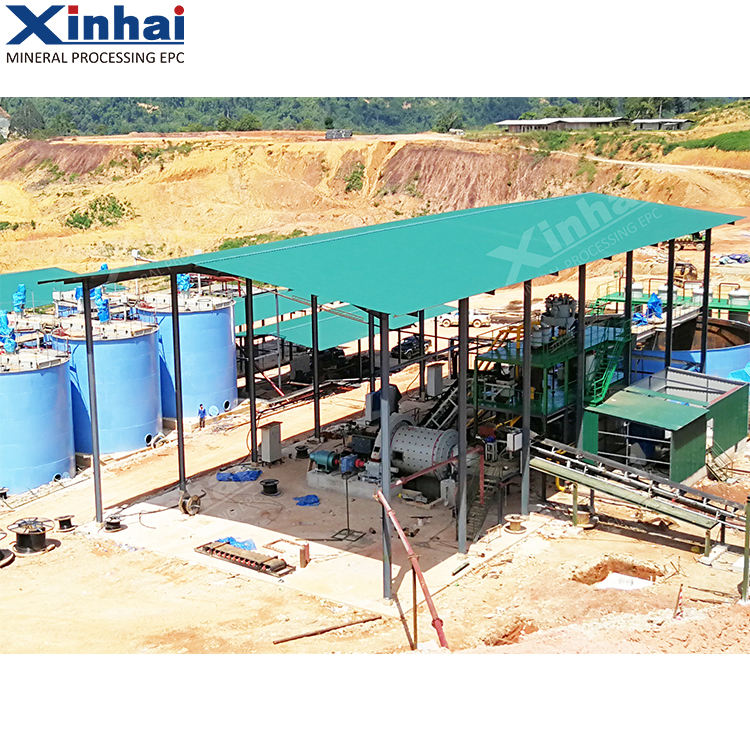
Choosing how to recover gold is one of the highest-leverage decisions in a mining project. The right process can mean the difference between a profitable operation and one that never recovers its capital. This guide compares the three most common gold-recovery routes — carbon-in-pulp (CIP), carbon-in-leach (CIL) and heap leaching — and explains the ore characteristics that point to each.
1. The Three Processes at a Glance
All three dissolve gold into a leach solution and then recover it, but they differ in how and where leaching and adsorption happen:
- CIP — the ore is ground and leached in dedicated tanks first; activated carbon is then added in separate adsorption tanks to capture the dissolved gold.
- CIL — leaching and carbon adsorption happen at the same time in the same tanks, which suits ores containing "preg-robbing" carbonaceous material.
- Heap leach — crushed (or run-of-mine) ore is stacked on a lined pad and irrigated with leach solution; gold-bearing solution is collected and processed separately.
2. How to Choose: The Deciding Factors
| Factor | Favours CIP / CIL | Favours Heap Leach |
|---|---|---|
| Ore grade | Medium to high | Low grade |
| Particle size | Fine (ground) | Coarse (crushed) |
| Recovery | Higher (90%+) | Lower (60–80%) |
| Capital cost | Higher | Lower |
| Footprint | Compact plant | Large leach pads |
As a rule of thumb, higher-grade ores justify the capital of a CIP/CIL plant because the extra recovery pays back quickly. Low-grade ores that would be uneconomic to grind are often better suited to heap leaching, where lower recovery is offset by much lower operating cost.
3. When Mineralogy Forces the Choice
Sometimes the ore decides for you. Carbonaceous, "preg-robbing" ores adsorb dissolved gold onto natural carbon before you can recover it — here CIL wins, because adding activated carbon during leaching out-competes the natural carbon. Refractory ores, where gold is locked inside sulphide minerals, usually need a pre-treatment step (roasting, pressure oxidation or bio-oxidation) before any leach process will work.
The only reliable way to choose is to test your actual ore. Bench and pilot leach work removes the guesswork and underpins a flowsheet that performs from day one.
4. The Xinhai Approach
At Xinhai, every gold project starts in our ore-dressing research institute. We run leach kinetics, carbon adsorption and (where needed) refractory pre-treatment tests on your ore, then design the full gold room — leach and adsorption tanks, agitators, screens, desorption-electrolysis and smelting — and deliver it as one EPCM+O package. For operators seeking a lower-toxicity option, our CNLITE gold dressing agent replaces sodium cyanide without changing the flowsheet.
The result is a gold plant matched to your ore, your grade and your budget — engineered, built and commissioned by one accountable partner.
Have a gold project in mind?
Get a free flowsheet recommendation based on your ore.